Wednesday, August 09, 2006

52 books in 52 weeks

16. The Accidental by Ali Smith

If William Faulkner and Ian McEwan birthed a daughter who wrote a novel, it would be The Accidental. This is the first book in a long time that I felt I should read a second time.

17. The Brooklyn Follies by Paul Auster

Aside from some exposition on American literature, this novel is barely recognizable as an Auster offering. It is, however, very charming and humane, with characters that you miss when they're gone.

18. Arthur & George by Julian Barnes

This book took forever to read. In the end, I'd have to say it's much too dry, even if (because?) the story told does outline an important reform in British legal history largely inspired by the efforts of Arthur Conan Doyle.

19. The Consolations of Philosophy by Alain de Botton

I want to marry Alain de Botton. His brand of philosophy-lite is just what the doctor ordered and it works magic.

Mere hours after beginning the book and realizing I wanted to spend more time with philosophy, I was offered an Intro to Philosophy class to teach. See? Magic.

19 down, 33 to go.
-

Tuesday, August 08, 2006

it is neither from Tuscany nor whole

This innocent gallon of milk on sale at Amazon's new grocery section has been mobbed by literary prankster/reviewers.

A deadly strain of weapons-grade HRV-A was released in my office building. The place was immediately quarantined and we were all told that we had 3 hours to live. Fortunately, someone left a gallon of Tuscan Whole Milk in the cafeteria refrigerator. A few of my coworkers and I decided to sit down and enjoy our last moments drinking this delicious white colloid. And then a miraculous thing happened. I felt that I had enough strength to crawl over to this computer and waste my last minutes typing a revief;ldk

Sunday, August 06, 2006

sunday short stack


For brunch, some old links that have been lying around...


-

Friday, August 04, 2006

arthur lee (1945 -2006)

Arthur Lee has died after a battle with leukemia.

Lee, a Memphis native who referred to himself as "the first so-called black hippie," formed Love in Los Angeles in 1965, emerging from the same scene as groups like the Byrds, Buffalo Springfield, the Doors and the Mamas and Papas.

The first multiracial rock band of the psychedelic era, Love recorded three groundbreaking albums fusing traditional folk rock and blues with symphonic suites and early punk.

Bands as diverse as Led Zeppelin, Echo and the Bunnymen, and Siouxsie and the Banshees cited Love as an influence.

Showing up at work one night at a club on Sunset and seeing Arthur Lee for the first time is a highlight of my time in Los Angeles.
-
--

Thursday, August 03, 2006

he just went berserk

This is the actual headline:

Elvis’ teddy bear leaves building the hard way:
Guard dog rips head off Presley’s $75,000 toy in stuffed-animal rampage

When was the last time I went on a stuffed-animal rampage? Obviously, it's been way too long.

Usage Note: According to Strunk & White, only ancient proper names like Achilles, Jesus, Moses, and Isis don't take the apostrophe and the 's' after their names to form the possessive. (For example, it would be Chris's blog.) I guess Elvis has joined the biblical and mythological pantheon. He is the King, after all.
-

Wednesday, August 02, 2006

why it is man alone who laughs

Once upon a time, this guy read this article and now the girls of Central Park are fending off lines like "Hey baby, I find my happiness in hardness against myself and others. Wanna get a cup of coffee?"
-

Tuesday, August 01, 2006

get barron trump a new hair stylist now

Watch Hollywood's babies morph into creepy adults - right before your very eyes!

Thursday, July 27, 2006

rocky mountain high

I'm off to the land of these folks for what I've been promised is "the social occasion of the summer." If there's something I shouldn't leave Denver without doing, please speak up...
-

Wednesday, July 26, 2006

roller coasters have inclines and boxers have fists

Pitchfork's summer reading list includes the new collection from rock critic Frank Kogan, Real Punks Don't Wear Black:

What sets Kogan apart is his deep, sincere, wildly enthusiastic embrace of (scare-quote alert) "crap." L'Trimm and Teena Marie and Toby Keith and Spoonie Gee and Sophie B. Hawkins get the same obsessive rave-treatment as the Rolling Stones or Bob Dylan or Lifter Puller, whose greatness Kogan documented before just about anyone else. Kogan is also as likely to dote on fan-magazine letters from teenage girls as on actual lyrics and he actively despises what he calls the "PBS path" of indie rock, the canon-building impulse that flattens out tangles and turns consensus into accepted truth. But it's not a pose: If you doubt Kogan loves L'Trimm with all his heart, the spun-out joy in his writing should be enough to dispel any such foolishness.
-

Thursday, July 20, 2006

much ado about untitled

Slate examines the mystery around Thomas Pynchon's Amazon page.

Was this a hoax? A jump-the-gun glitch? A hype? In any event, one Amazon customer must have gone through his Web browser's cache and reposted the thing on the customer discussion board, touching off an instant classic of that kind of chatter where M.F.A. meets LSD. The following comments are fairly typical: "I am saying that the blurb is Pynchon parroting Pynchon … viral-marketing or, more hopefully, a Swiftian self-parody and critique of Internet subcultures (a sort of new, updated Tale of a Tub.)" Whee!

Also at Slate: A survey of bloggerdom, a review of Joseph Epstein's exposé of friendship, and a look at how need to vanquished have to, must, and should.
-

Monday, July 17, 2006

surrender to the terrible

I once applied to write a monograph on J.G. Ballard, and while I'm glad I wasn't saddled with that project before I had even completed my dissertation, I still have a soft spot in my heart for him in all his perverse complexity. John Foxx of Ultravox does, too.

From the late 70s to the early 80s, it seemed that most “post-punk” artists were happy to claim Ballard as an influence: Numan, Siouxsie, Ian Curtis, Cabaret Voltaire, yourself… Why did Ballard have resonance for such a particular group of musicians back then?

I think some of this may have been an attraction to the new modes of physical and intellectual violence on offer and to the uncompromising outer edge stance. This attraction naturally alters as the ‘mode of the music’ changes. Many other writers have since begun to colonise what JGB established, and elaborated that grammar to deal with new technological events, but it’s still essentially the same stance.

He was the first radical and relevant novelist of this technological age in Britain. You had Burroughs and Philip K Dick in America but they were connected to the beat movement, using drugs as a lens, reflecting an American landscape. I always enjoyed JGB’s Englishness, living in a middle-class suburb writing about a new landscape we’d only just come to live in – more akin to McLuhan’s academic/romantic take on the unrecognised present.

I think what Ballard maps out so well is that moment of surrender to the terrible. A total, inevitable, final embrace. After Hiroshima we really had no choice. It was impossible to pretend that the world would ever be the same again. We all sleep there every night, now. Ballard blueprinted all that like no one else I’ve ever read.

Friday, July 14, 2006

that's a really long name for a software program

I'm a longtime fan of John Hodgman, so I can't help but agree with Seth Stevenson that the new Mac ads backfire.

My problem with these ads begins with the casting. As the Mac character, Justin Long (who was in the forgettable movie Dodgeball and the forgettabler TV show Ed) is just the sort of unshaven, hoodie-wearing, hands-in-pockets hipster we've always imagined when picturing a Mac enthusiast. He's perfect. Too perfect. It's like Apple is parodying its own image while also cementing it. If the idea was to reach out to new types of consumers (the kind who aren't already evangelizing for Macs), they ought to have used a different type of actor.

Meanwhile, the PC is played by John Hodgman—contributor to The Daily Show and This American Life, host of an amusing lecture series, and all-around dry-wit extraordinaire. Even as he plays the chump in these Apple spots, his humor and likability are evident. (Look at that hilariously perfect pratfall he pulls off in the spot titled "Viruses.") The ads pose a seemingly obvious question—would you rather be the laid-back young dude or the portly old dweeb?—but I found myself consistently giving the "wrong" answer: I'd much sooner associate myself with Hodgman than with Long.

Now VH1 has come out with a series of parodies that underscore Stevenson's point. (Link via Old Hag from whom, in a nice neat little circle, I won a copy of Hodgman's The Areas of My Expertise.)
-

Wednesday, July 12, 2006

scenes from a small town fourth

I can't remember the last time I celebrated a Fourth of July without fireworks over the East River, so it was a unique treat for me to spend this year's Independence Day in a small town in Vermont.

While my hosts joined the town parade on their bikes, I volunteered to act as photographer.

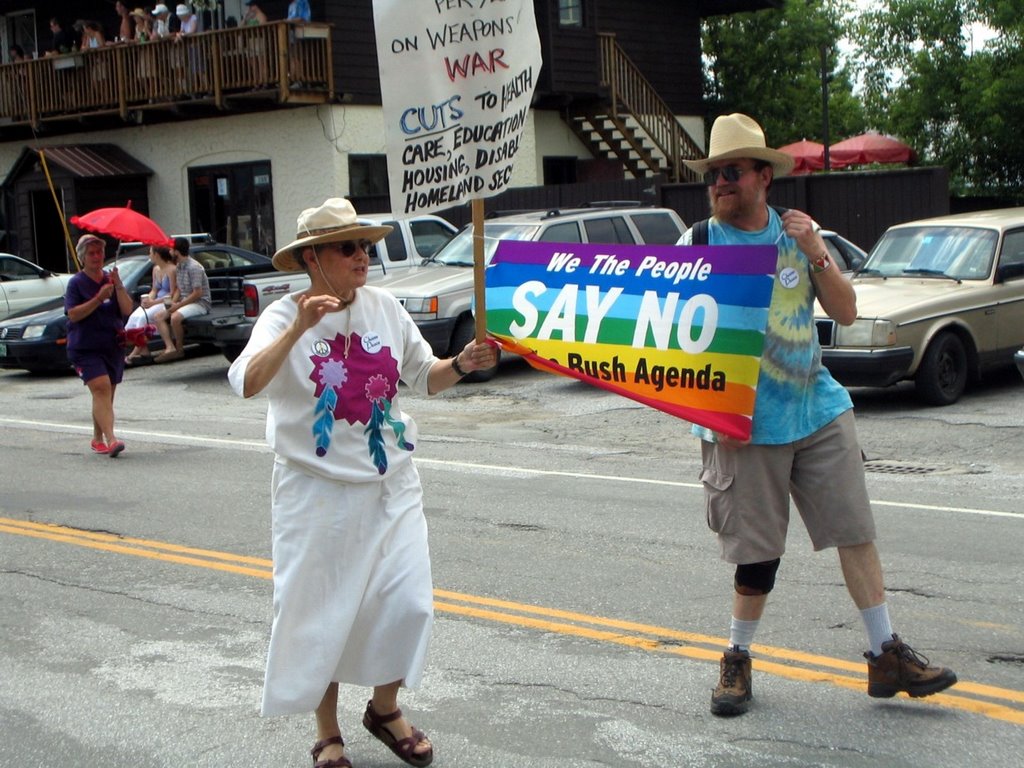
I was happy to see these folks giving out Choose Peace pins at the front of the parade.

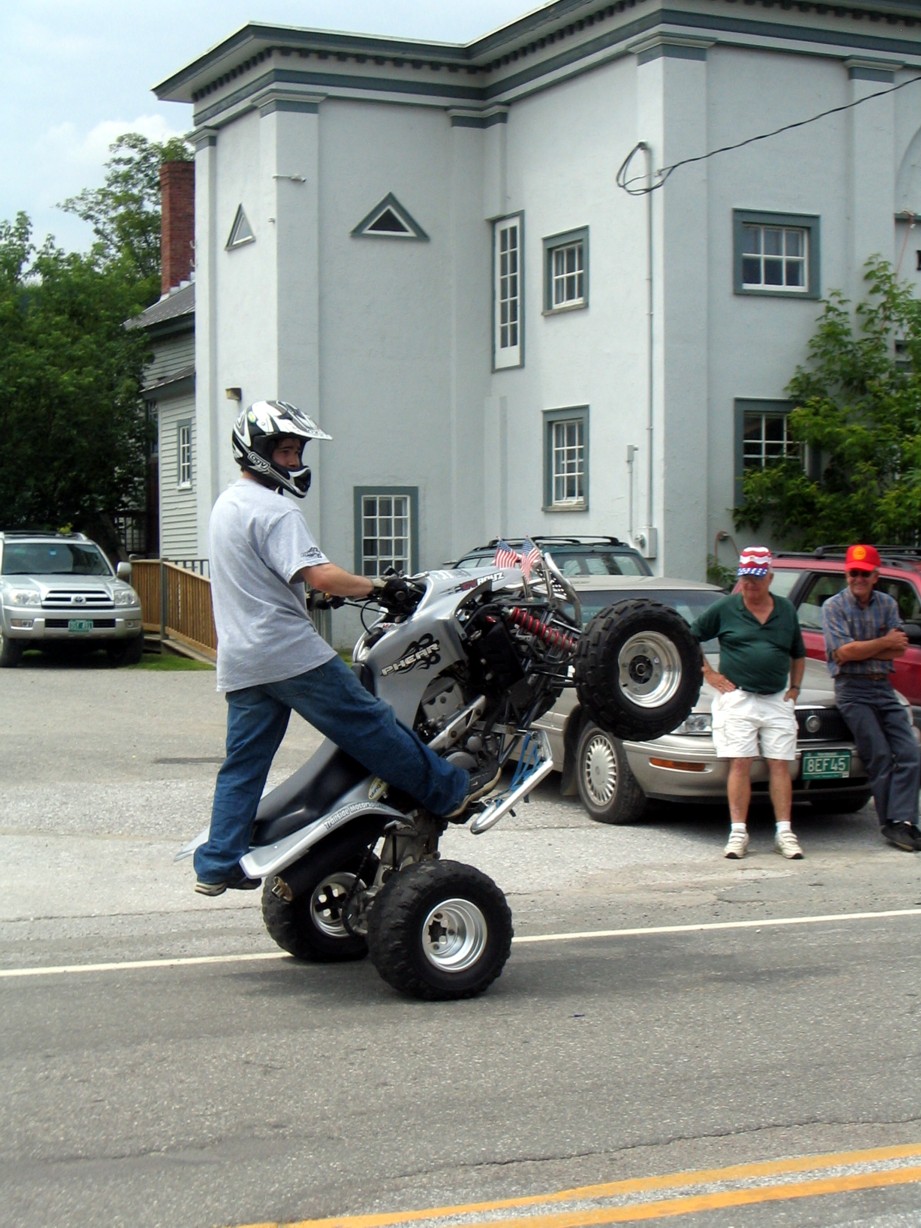
There were two of these guys and dueling pop-a-wheelies.

I have no idea what this creature represented, but I dug it.

Many of the parade attractions showcased vehicular power, including this fierce Volvo.

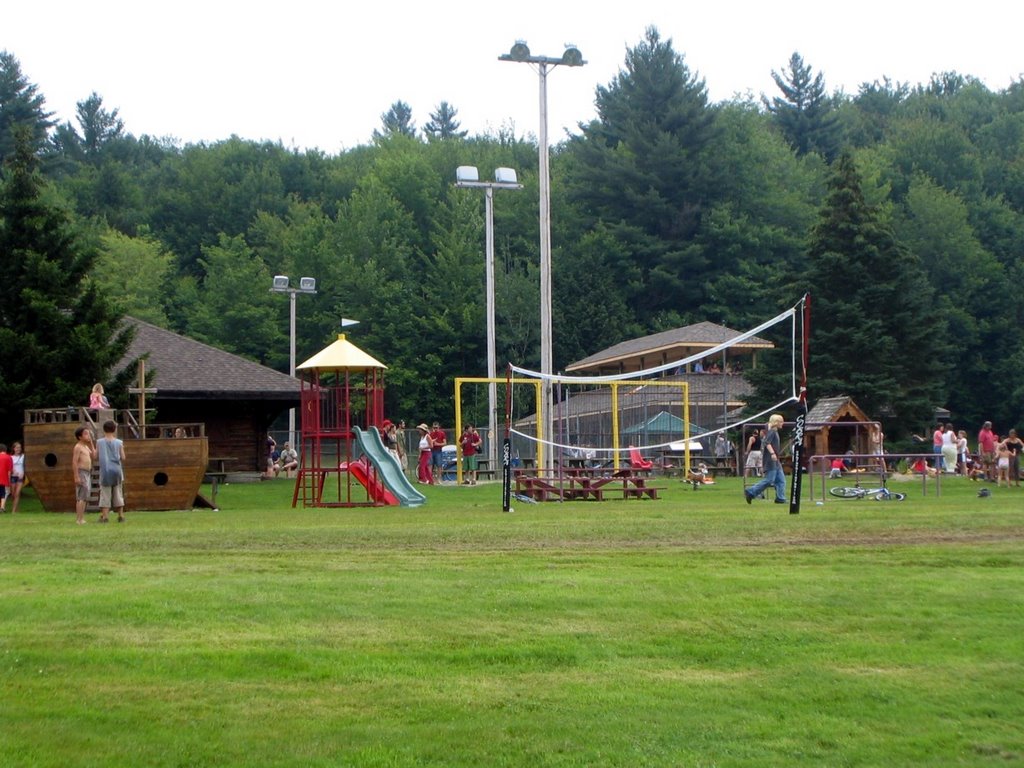
The parade ended at this park, featuring a BBQ attended by the whole town.
-

what nourishes me also destroys me

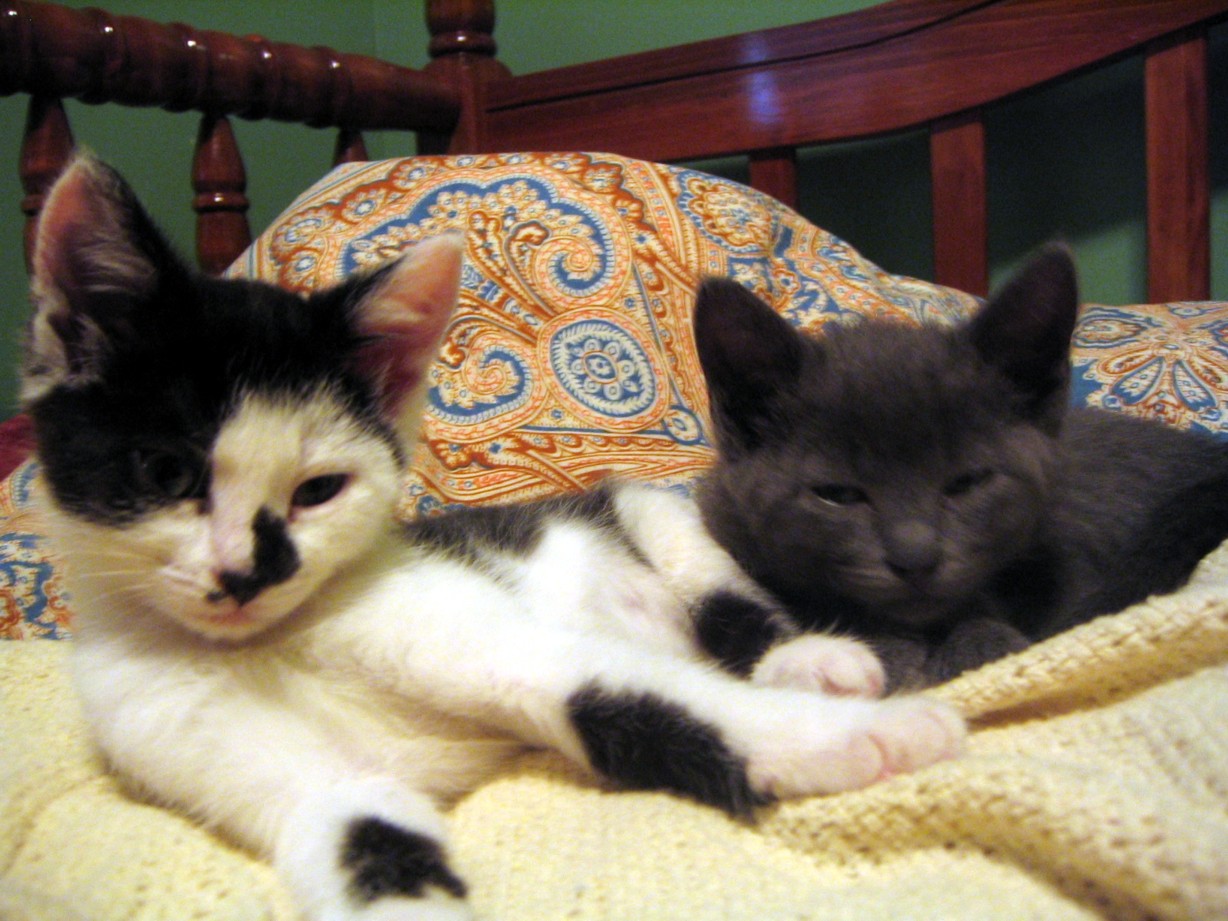
I couldn't keep my hands off these ten-week-old Vermont kittens and I paid the price in allergies.
-

closer to god

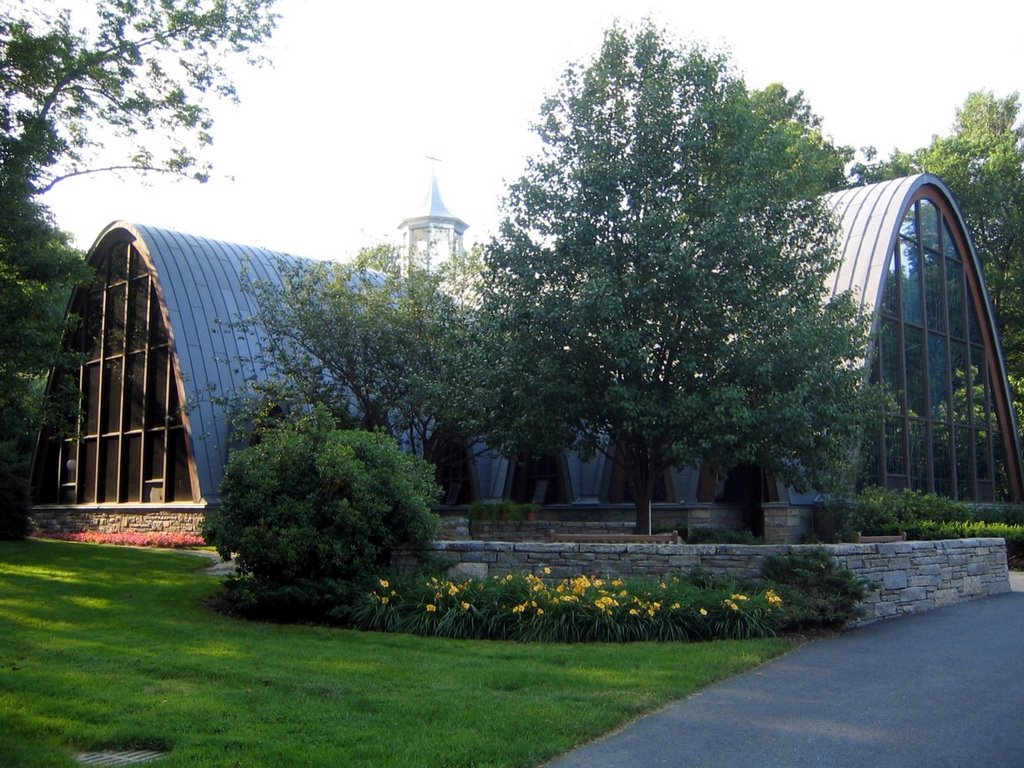
My brother was married in the most beautiful church I've ever entered in the U.S. The interior walls were crafted entirely of wood, arching gorgeously above the altar.

-