Tuesday, November 14, 2006

listen, pussycat, smile a bit

Salon analyzes "What's real in Borat?" (Like this is news to anyone, but I saw the film and it is outrageous and painfully funny. Sacha Baron Cohen is dangerously insane and, to be frank, hot.) This MetaFilter thread about the poor humiliated frat boys is also entertaining: "Your friend can reasonably console himself that people who pay to see this movie, almost by self-selection and operation of simple destiny, will not likely be in a position to detrimentally affect his life in any substantial way." Oh, yes, I am sure that is true - NOT!
-

Monday, November 13, 2006

do we, vampire-like, feed on each other?

The Independent looks at literary partnerships - who's musing who?

But it is those 20th-century heterosexual relationships, charged by sexual passion and either flittering out when that passion dies, or, in some cases, imploding with horrific consequences, that are the most complex, the most teasing, and ultimately the ones that intrigue us most. Above and beyond their work, West, Mansfield, Rhys, Beauvoir, Gellhorn, Plath and Smart are famous for being essentially "victims of love". At least four of them were deserted by their lovers or husbands (Mansfield escaped this fate by dying young and Beauvoir by participating in sexual games that she seems to have had little real interest in); West threatened suicide when Wells left her shortly after the beginning of their liaison, and even wrote a short story, "At Valladolid" about it; while Madox Ford's rejection of Jean Rhys after 18 months, according to one biographer, drove her further towards alcoholism. Plath, who might be called the poster girl for this group, and for abandoned women everywhere, did of course actually kill herself.

And yet. While the female half of the literary partnership tended to be less famous at the outset than her male counterpart - Barker was a flamboyant and hugely promising published poet when Smart began her pursuit, Hughes had a considerable reputation at Cambridge, and Wells was fast approaching the peak of his fame, as was Madox Ford - it is that female half who has posthumously either equalled or even exceeded her partner's reputation. Quite a remarkable feat for these poor, lonely, abandoned "victims".

Via WOTS

Sunday, November 12, 2006

sunday short stack


"Everywhere is walking distance if you have the time." - Steven Wright


-

Saturday, November 11, 2006

do not fall in love


R Train Wisdom via Wooster Collective

Friday, November 10, 2006

das parfum

I can't decide whether this preview for Run Lola Run director Tom Tykwer's adaptation of Patrick Suskind's novel makes it look great or awful. It might be fine without the voiceover. (The German trailer is a little better - NSFW.)


-

Thursday, November 09, 2006

how did the feeling feel to you

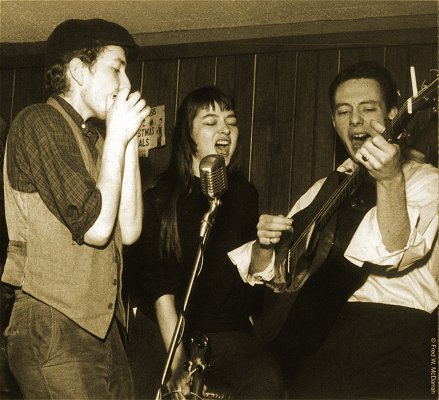
One other exciting thing happened on Tuesday - the long-awaited remastered release of Karen Dalton's second album, In My Own Time. Part of the Greenwich Village folk scene in the 1960s, Karen Dalton seems to have inspired many artists and created few songs. She's pictured above with Fred Neil and Bob Dylan, who cites her as one of his influences. She's often compared to contemporaries Vashti Bunyan and Linda Perhacs and referenced in discussions of Josephine Foster and Joanna Newsom. Pitchfork claims that she hated the most frequent comparison to Billie Holliday. She battled the usual demons before her death in 1993.

I received Dalton's first release - It's So Hard to Tell Who's Going to Love You the Best - as a gift and after growing accustomed to her unusual voice, I have almost worn it out through constant rotation. The album is worth buying for the liner notes alone that tell of a single mother who hated performing but found music to be the only way she could relate to people. Reed Fischer of Paper Thin Walls writes:

Folk luminary Bert Jansch and newbies White Magic have both released versions of "Katie Cruel" this year, and each is greatly indebted to Karen Dalton’s 1971 interpretation of the traditional tune. Dalton, also known as Sweet Mother KD, unleashes each note with a weathered bray that sounds less jarring to Banhart-ized ears than it did when she was kicking around New York in the ’60s with Fred Neil and Bob Dylan. Like Billie Holiday’s thick, dirty-on-purpose tones even further unhinged, Dalton’s alto is rife with bends and rasps that turn in on themselves. “When first I came to town/They bought me drinks aplenty/Now they’ve changed their tune/Hand me the bottles empty,” she sings as a woman in her 30s. But vocally, Dalton doubles her age and plants herself in a ramshackle hut with a lifetime of regret. Her masterful long-neck banjo picking and the shrill violin in the background roll together like dust on the road to a foreign, timeless place. Much like how Nick Drake predicted his posthumous notoriety on “Fruit Tree,” Dalton makes “Katie Cruel” about her own doomed career by the final stanza: “If I was where I would be/Then I’d be where I am not/Here I am where I must be/Where I would be I cannot.” In My Own Time was Dalton’s second and final album, and her hard life ended in 1993.

You can stream "Katie Cruel" here. There are some other sound files at Stefan Wirz's fan site, where I found the photo above, and at NPR. She even has a decent MySpace page. At the Seattle Weekly, Brian J. Barr asks, "Why wasn't she huge?"
-

Wednesday, November 08, 2006

a sight for sore eyes

OK, Dems, don't screw it up.
-

Tuesday, November 07, 2006

friendly reminder

"The reason your side doesn't like my side is because you think we think you're stupid. The reason my side doesn't like your side is that we think you're stupid." - Studio 60

Don't be stupid. Vote today.
-

Monday, November 06, 2006

meditation and bedticks

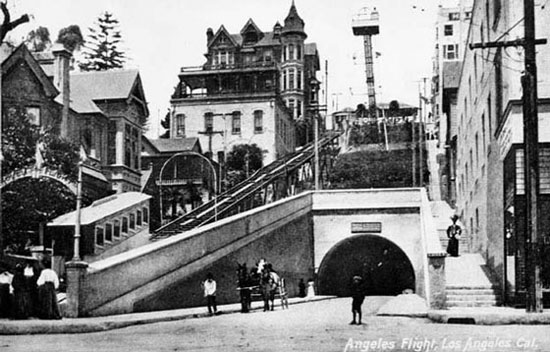
Over at Reading California Fiction, Don Napoli reviews one of the books from the escapegrace dissertation: Don Ryan's Angel's Flight. Ryan's failings raise his ire:

It's not unusual for me to wish that an author had ended a book another way. But I believe that only in Angel's Flight did I want the author to just stop writing at a certain point. If you had just quit here (p. 251) or perhaps even here (p. 237), I want to tell Don Ryan, you would have produced a major piece of American fiction. What was the problem? Didn't you understand what this book is about? Did you think you were being paid by the word? Oh well, I suppose getting angry won't help.

You can read more from the review here. (Don eventually does recommend the book.) I also found Angel's Flight pretty limited, but it did serve its purpose for me, providing one of the earliest caricatures of Aimee Semple McPherson. Here's my take:

In his 1927 novel Angel’s Flight, possibly written before [McPherson's] kidnapping incident, Don Ryan opens his story in a mission “that provided soup in the name of Jesus,” conducting outreach in the tradition of the Angelus Temple (13). According to Daniel Mark Epstein’s biography Sister Aimee, when an earthquake devastated Santa Barbara in June 1925, McPherson’s fleet was first to arrive on the scene with supplies, long before the Red Cross even met to discuss aid strategies. In Ryan’s novel, the down and out of downtown L.A. appreciate the handouts but not the message: “A sneer twists [a vagrant’s] lips over widely spaced teeth as he listens to the promises which the mission folk hold forth. Thwarted by circumstance, hunted by oppression, dogged by the law, he has listened in jail and bull-pen and flop-house to the promise of eternal life. His brain, which is clear, has analyzed the elements of religion and discarded the promise” (15).

Not all Los Angeles residents at the time felt that religion was the answer to all their problems, and Ryan’s protagonist is one such cynic. He refers to the mission band as “those miserable beings who find an antidote for their inferiority by ministering to those more miserable even than themselves” (18).
Will Pence, former newspaper reporter, has hit the skids when the novel opens and finds himself briefly involved in a life of crime. Like much of the plot of Angel’s Flight, his narrow escape and return to respectability are never fully explained or questioned. Pence gets work writing features for a small newspaper, chronicling “the greatest sideshow on earth” (44):

Enriched by post-war food prices, the American peasantry with money to spend flocking to Los Angeles as to a country fair. Hither likewise came the variegated hordes to prey upon them….Swamis stalked the streets wrapped in meditation and bedticks. Famous bunco men honored the city with permanent residence. Cults and creeds that had lain dormant since the time of Pythagoras springing to life to bloom exotically in semi-tropic air. An alchemist hung out his sign on Sunset Boulevard, advertising to perform physical and spiritual transmutation. Holy men from the hills, barefooted, hairy, bearded in simulation of the Nazarene, selling postcards on the corners (62).

One of the characters created by Ryan to fall prey to the variegated hordes is Galens, an unemployed victim of age discrimination who attends motivational speaker Elsie Lincoln Benedict’s course of lectures on “Personality – the Key to Success” in an attempt to give himself an edge in the marketplace. Ryan’s description of the lecture course and of Elsie Lincoln Benedict sounds strikingly similar to the self-improvement allure of Aimee Semple McPherson, albeit on a more secular and fiscal plane. Pence attends a meeting and sees “row upon row of sallow, hopeful, middle-aged faces turned up in pathetic expectancy towards an illuminated rostrum on which a dazzling woman in a scarlet evening gown was telling them how they could become young again….Their weary, disappointed faces turned up towards this high priestess of their cult” (81-2). Pence recalls Mencken’s description of the boobus Americanus, a sitting duck for Inspiration and Optimism. Elsie Benedict shills her course of lessons (“how to stay young above the neck”) and guarantees that all takers will have their “one big question” answered, evoking images of Sister Aimee in her private chambers after a sermon, meeting for hours on end with parishioners who would wait in long lines for one answer from the evangelist.


Pence makes the acquaintance of Galens at Benedict’s lecture and soon thereafter, perhaps inspired by a renewed feeling of optimism thanks to Elsie Benedict, Galens turns up at Pence’s office, looking to sell him some life insurance. Pence’s time in the Army has provided for his life insurance needs, and when Galens tries to sell him on more coverage, Pence argues that he’d prefer a policy with no suicide clause. Despite Galens’s protestations that if Pence waited a year to take his life, he’d be covered under the policy he was selling, Pence is not interested. He finally uses Elsie Benedict to get rid of the ineffectual salesman: “Look at my head, Galens. Remember what Elsie told you. Size me up phrenologically. Get my number” (89). Galens leaves empty-handed. Under the pressures of a few more failures, his sick wife, and his adulterous longings, Galens eventually takes his own life instead. Pence quits his position as a reporter when the paper is sold to Hearst, gets a job as an actor in a film production, and then is hired to write titles for the film in New York, where he is reunited with the illegitimate daughter he didn’t know existed.


Elsie Benedict is possibly the most cynical version of the Aimee Semple McPherson type: there is nothing humanistic, spiritual, or powerful about her beyond the fact she has figured out a way to play on the anxieties of the aging. Ryan frames his description of Benedict in ways that call to mind something deeper than vanity and greed – the faces turned up toward the high priestess – but in the end, youth is something that cannot be granted, even by the most prolific twentieth-century healers. Arthritis? Tumors? Blindness? Aimee Semple McPherson was believed to have cured all of these ailments. Aging? Not even in Hollywood.

Sunday, November 05, 2006

sunday short stack


"There's something so showy about desperation; it takes hard wits to see it's a grandiose form of funk." - Elizabeth Bowen


-

Friday, November 03, 2006

they do things differently in bourgeois bohemia

They could film an infomercial for knives starring Cate Blanchett and Judi Dench and I'd rush out to see it, so it's even better that they're in the adaptation of a book I enjoyed.


-

Thursday, November 02, 2006

william styron (1925-2006)

William Styron has died of pneumonia at 81.

Styron was a Virginia native, whose fascinations with race, class and personal guilt led to such tormented narratives as Lie Down in Darkness and The Confessions of Nat Turner, which won the Pulitzer Prize despite protests that the book was racist and inaccurate.

Among his other works were
Sophie's Choice, his award-winning novel about a Holocaust survivor from Poland, which was later turned into an acclaimed film starring an Oscar-winning Meryl Streep, and A Tidewater Morning, a collection of fiction pieces. He also published a book of essays, This Quiet Dust, and a bestselling memoir, Darkness Visible, in which he recalled nearly taking his own life.

A lifelong liberal, Styron was involved in many public causes, from supporting a Connecticut teacher suspended for refusing to say the oath of allegiance, to advocating human rights for Jews in the Soviet Union. In the 90s, he was one of a group of authors and historians who successfully opposed plans for a Disney theme park near the Manassas National Battlefield in northern Virginia.

Styron wrote: "A great book should leave you with many experiences, and slightly exhausted. You should live several lives while reading it."
-

be careful where I find you

I've seen some Robert Wilson productions (The Black Rider, most recently), and even though poor Brad might be miffed about the unauthorized use of his mug, seeing him move in the unnaturally phlegmatic manner that characterizes Wilson's style of direction is fairly entertaining.
-

Wednesday, November 01, 2006

endorsed by teller

That Houdini gets into so much trouble. Now he's been found to have spied for Scotland Yard.

The biography lays out a scenario where Houdini, using his career as cover, managed to travel the United States and the world while collecting information for law enforcement. The authors made the link after reviewing a journal belonging to William Melville, a British spy master who mentioned Houdini several times.

Melville, while at Scotland Yard in the early 20th century, helped launch Houdini's European career by allowing the performer to demonstrate his escape skills. Houdini, at a demonstration arranged by Melville, slipped free from a pair of Scotland Yard handcuffs as an audition for a London theater owner.


The book suggests that Melville's compliance was part of a quid pro quo in which Houdini worked as a spy. A similar situation occurred in Chicago, where Houdini's career took off after a publicity stunt aided by a local police lieutenant, the book said.
-

how many of me

This search engine purports to tell you how many people in the U.S. share your name. Supposedly, there are 26 more of me, but considering I've met 2 or 3 of those folks already, I would presume the number to be higher.
-